KHVVG Goals, Maslow’s Pyramid, Clinical Workflows
There is a lot to be said and seen about how the KHVVG and KHZG reforms are going to change the German healthcare market, but the goals are clear, from Springer Nature:
The financing reform, as a central component of the Hospital Care Improvement Act (KHVVG), was associated with a diverse range of goals to be achieved, including:
1.to reduce the incentive to increase quantities,
2.to ensure and improve the quality of care,
3.to secure (necessary) small rural hospital locations,
4.to create an incentive at the state level for further location consolidation,
5.to support a fundamental improvement in the economic efficiency of the hospital sector,
6.to reduce the economic incentives that could lead to under-, over- or mis-provision in healthcare decisions and
7.to contribute to reducing bureaucracy.
There are currently four hospital levels - Level 1, 2, 3 and 4. The new reform introduces Level 1i, which is going to be a cross-sector clinic that bridges in-patient and out-patient care. Hospitals will then be classified into 65 service groups based on specialisations, with anyone failing to meet the criteria for a service group will be soft-landed into a Level 1i clinic. The funding models are also new: service groups will get 60% fixed base-level hospital funding, retention lump sum, and 40% will be from residual DRG. While Level 1i clinics will mostly continue to bill the out-patient care codes as usual.
I already briefly touched on the transition to out-patient care few weeks ago, but what I find fascinating here is how similar this approach is to Maslow’s hierarchy of needs:
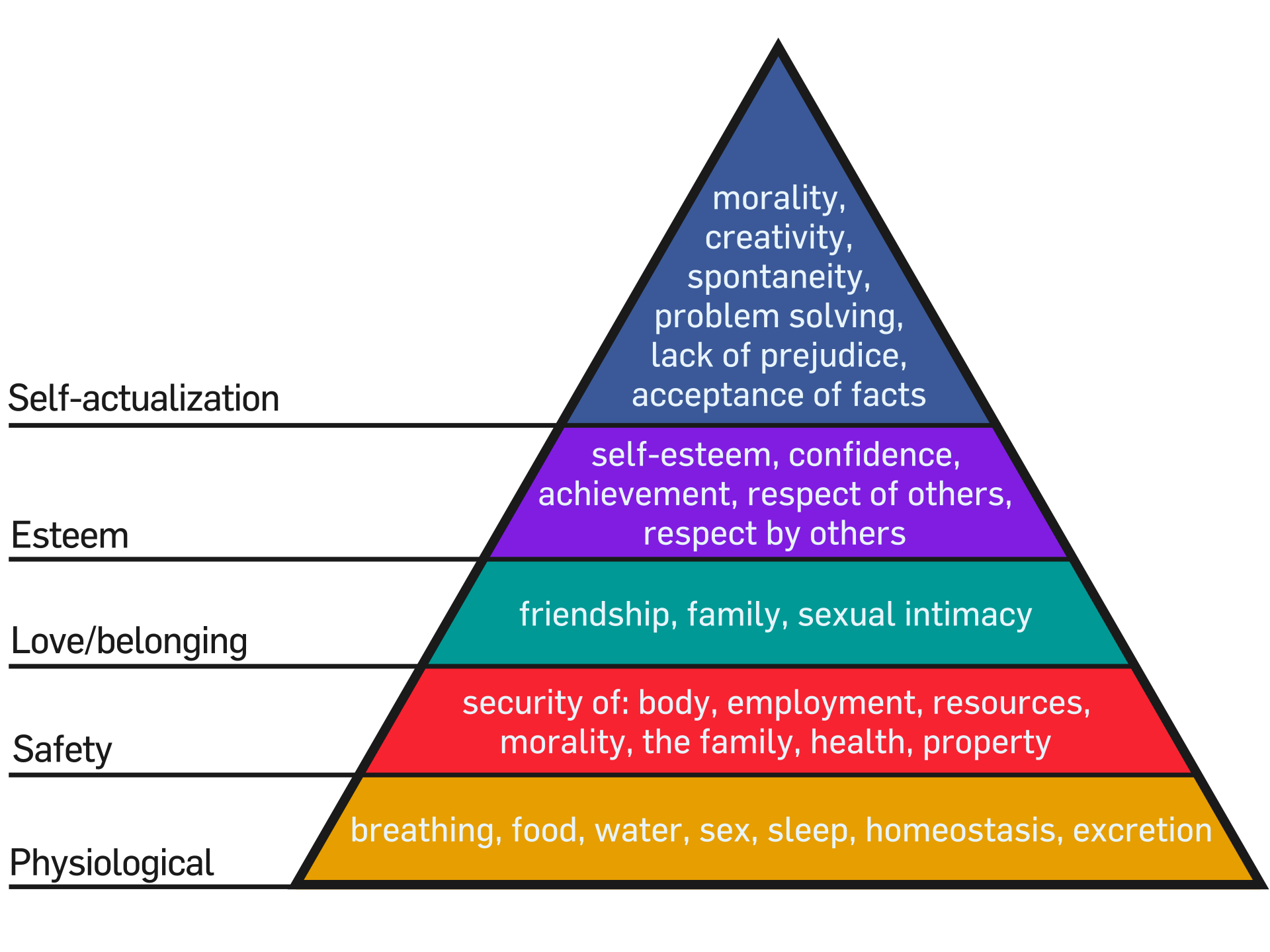
Putting KHVVG in Maslow terms sounds compelling indeed:
1. Physiological Needs: Basic Licensing and Physical Infrastructure
- In Theory: Air, water, food, and shelter required for basic biological survival.
- In the KHVVG: Meeting the basic structural criteria (Sachlich-apparative Ausstattung) and holding a license for a specific Service Group (Leistungsgruppe). If a hospital lacks a CT scanner or a basic laboratory, it cannot "breathe" or exist in the system.
2. Safety Needs: The 60% Retention Lump Sum (Vorhaltevergütung)
- In Theory: Financial security, health, well-being, and protection from unpredictable disasters.
- In the KHVVG: This is where the reform makes its direct intervention. Under the old 100% DRG case-fee system, hospitals had zero financial safety. A sudden 20% drop in patient volume could cause instant insolvency. The 60% lump sum acts as an existential safety net. It guarantees that the fixed costs (salaries, readiness infrastructure) are paid regardless of occupancy, stabilizing the baseline.
3. Social and Belongingness Needs: Regional Cooperation and Care Networks
- In Theory: Friendship, intimacy, trust, and acceptance within a community.
- In the KHVVG: The cross-group interdependencies (Wechselseitige Vorhaltung) and cross-sectoral care (Sektorenübergreifende Versorgung). Once financially secure, hospitals no longer view neighboring clinics as predatory competitors stealing "profitable case volumes." Instead, they can integrate into coordinated regional networks where complex cases are intentionally handed off to maximum-care centers.
4. Esteem Needs: Quality Rankings and Clinical Reputation
- In Theory: Respect, status, recognition, and mastery.
- In the KHVVG: Publicly visible quality indicators and transparency registers. Free from the daily panic of bankruptcy, a hospital can focus on optimizing its clinical mastery—achieving lower complication rates and earning recognition as a specialized center of excellence for its designated service groups.
5. Self-Actualization: Medical Innovation and Patient-Centric Care
- In Theory: Realizing personal potential, self-fulfillment, and doing what one is uniquely suited to do.
- In the KHVVG: Purely outcome-driven, highly specialized, patient-centric medicine. Doctors and nurses focus entirely on what is medically best for the unique patient in front of them, completely detached from whether that patient "generates profit" for the ward.
Those two hospital frameworks - Level 1i clinics and specialised service groups - differ greatly not just in their funding models, but also in their incentives. Level 1i clinics will have volume - lots of different but easy cases; while service groups will get the much fewer but complex ones. These differences are calling for different infrastructural setup, including software and hardware. Orchestrating various workflows and coordinating various specialised apps is a perfect fit for Level 1i clinics. While vertical integration and owning the workflow end-to-end is where Big MedTech will have advantage.