The Ways of the Workflow
AI is a change agent and NfX suggests three ways how the workflow might change:
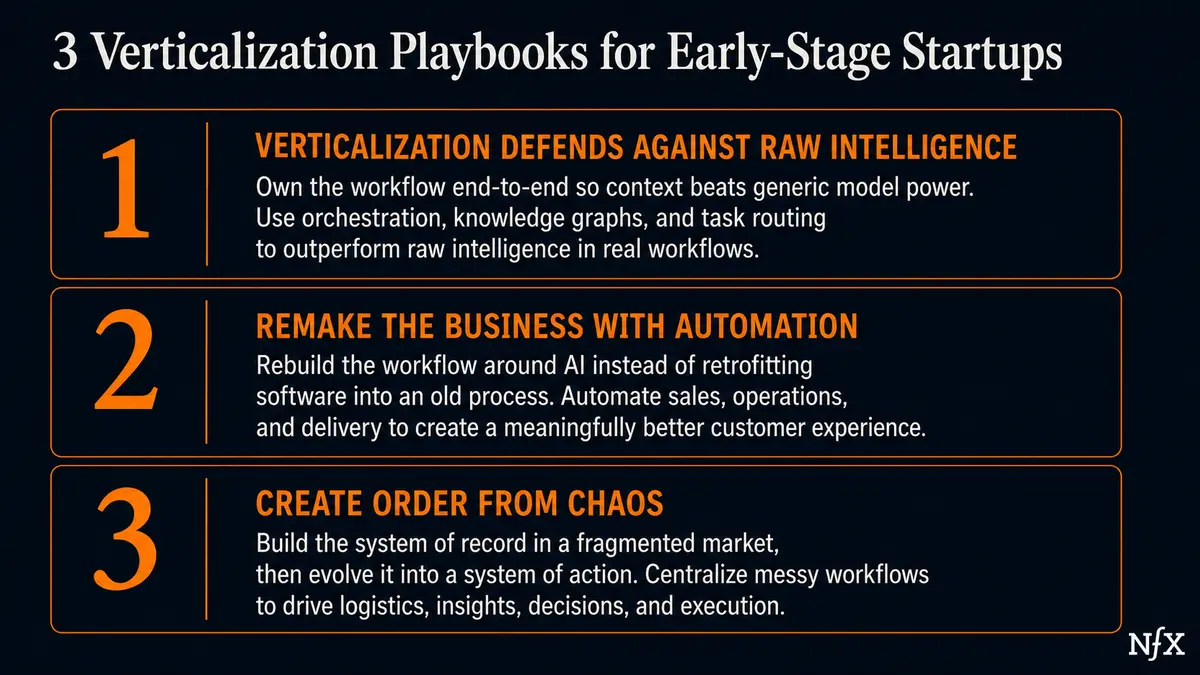
The first idea is that specialised AI tools - for example for diagnosis, documentation or billing - will need to be managed and orchestrated into a single smooth workflow. The opportunity is in owning and orchestrating the workflow for individual clinical domains and in that commoditising those AI tools, which now become just another API call.
The second idea is that there is no point trying to repair the existing system, and that instead the whole thing should to be remade. Don’t digitise the workflow; redesign it.
The third idea is that whoever owns the data, owns the workflow and thus has decision power. If you become the system of record, you become the place where actions take place. This is what Big MedTech is best positioned to do. Companies like Siemens Healthineers and GE Healthcare are already well established within clinics and already enable the generation of proprietary data. For them to expand their moats, they’d need to integrate vertically, and that’s exactly what they have been doing.
While the first idea is about creating a modular ecosystem of apps that are managed by a central workflow agent, similar to how an OS orchestrates the apps on your computer. The last idea is about a single company owning the whole workflow, end-to-end.
For all of this software to work, however, you need to have equally good hardware infrastructure and this is where most clinics and labs currently fall short. It doesn’t matter how quickly the code works if the local server has a 4 second respond time. Going to the cloud would make this problem disappear almost instantly, but for most hospitals in Germany that’s not an option because of data privacy concerns. Overcoming that bottleneck will unlock considerable growth for the entire sector.