
Data Value Chain, AI vs The Value of Human Judgement
Yesterday I discussed how AI agents moved from the the back end of the stack to the front end, increasingly becoming the main interface to the healthcare machinery.
Today I want to zoom in on how data actually flows through the system.
Let’s start with the origins of the data. When a patient visits the doctor, he’s the subject of the examination. It’s his condition that is being captured in the initial conversation and it’s his vitals that are being measured. Indeed, the clinician’s role at this point is to do just that - capture as much relevant data as she possibly can. This data capture can take the form of a doctor typing down information on their computer or by a diagnostic device measuring certain biomarkers.
All of this information is then collected, integrated and contextualised by the data storage layer, which includes the local HIS, potentially some cloud applications and the EHR/ePA, where the patient history is stored. The final layer is the intelligence layer, where the data is analysed and turned from mere information into actual knowledge. This is how it looks like in a drawing:
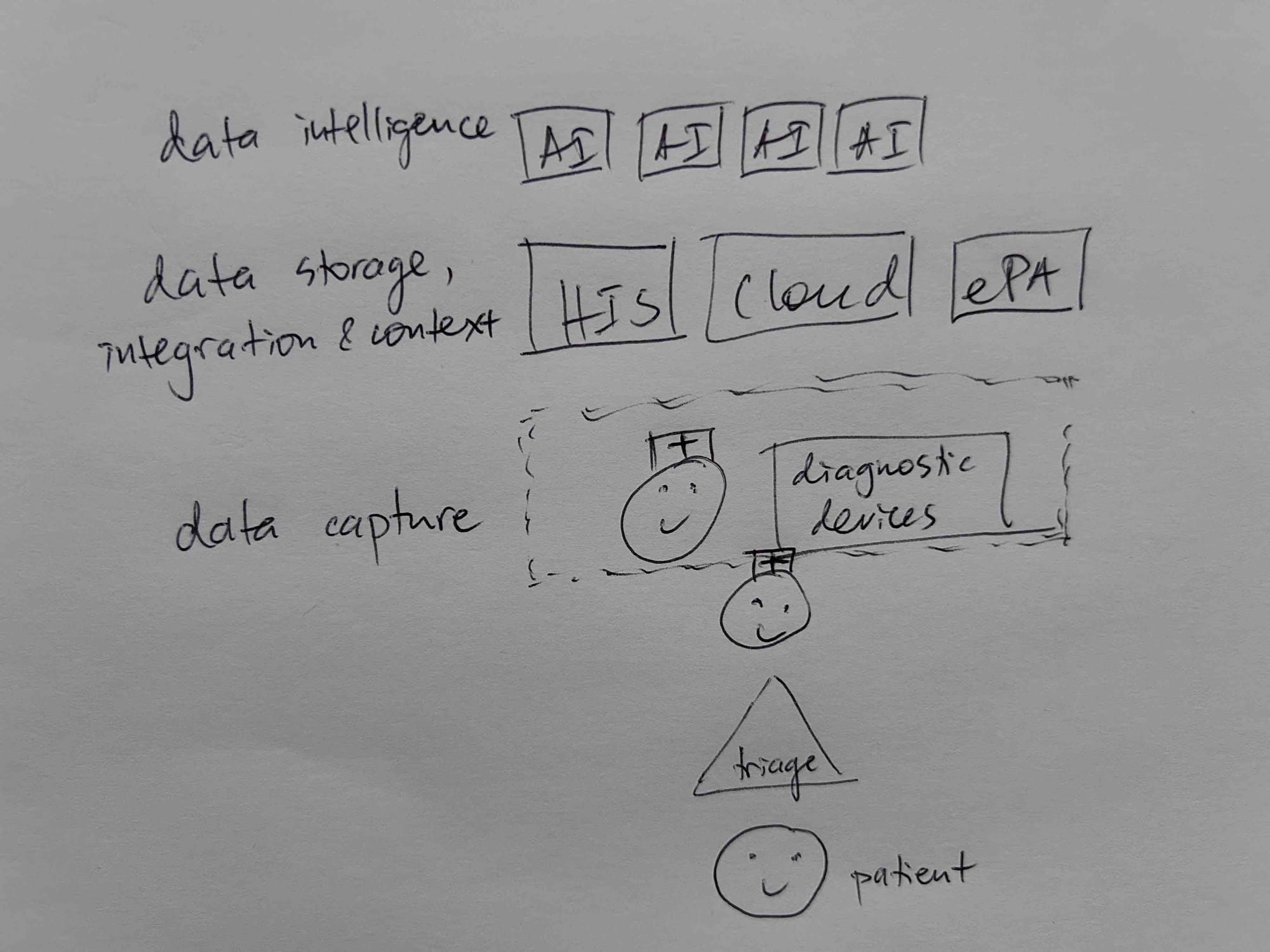
The data starts in a raw state at the patient, is then captured in various ways, contextualised and interpreted, and is finally sent back to the clinician for evaluation and treatment decision.
If you look closely enough, you may notice this process resembles a version of the data-information-knowledge-wisdom image you may have seen online:
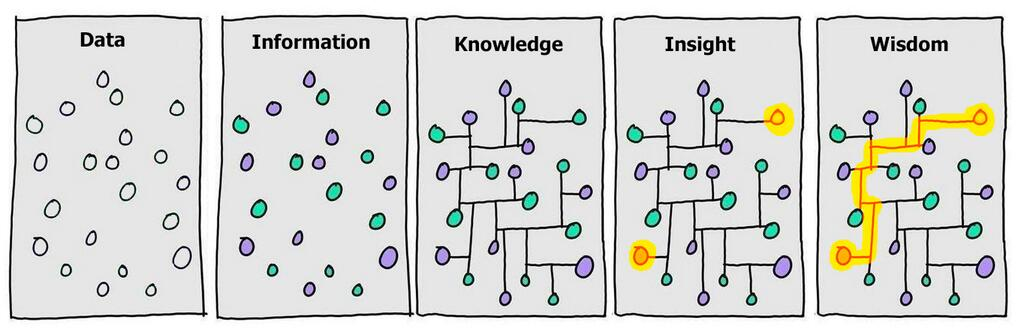
Also called the DIKW Pyramid, it maps perfectly into how data transforms from a raw material to something useful. Useful in the context of healthcare means actionable, as this is ultimately the goal - a patient comes with a problem and a doctor prescribes a course of action for how to fix that.
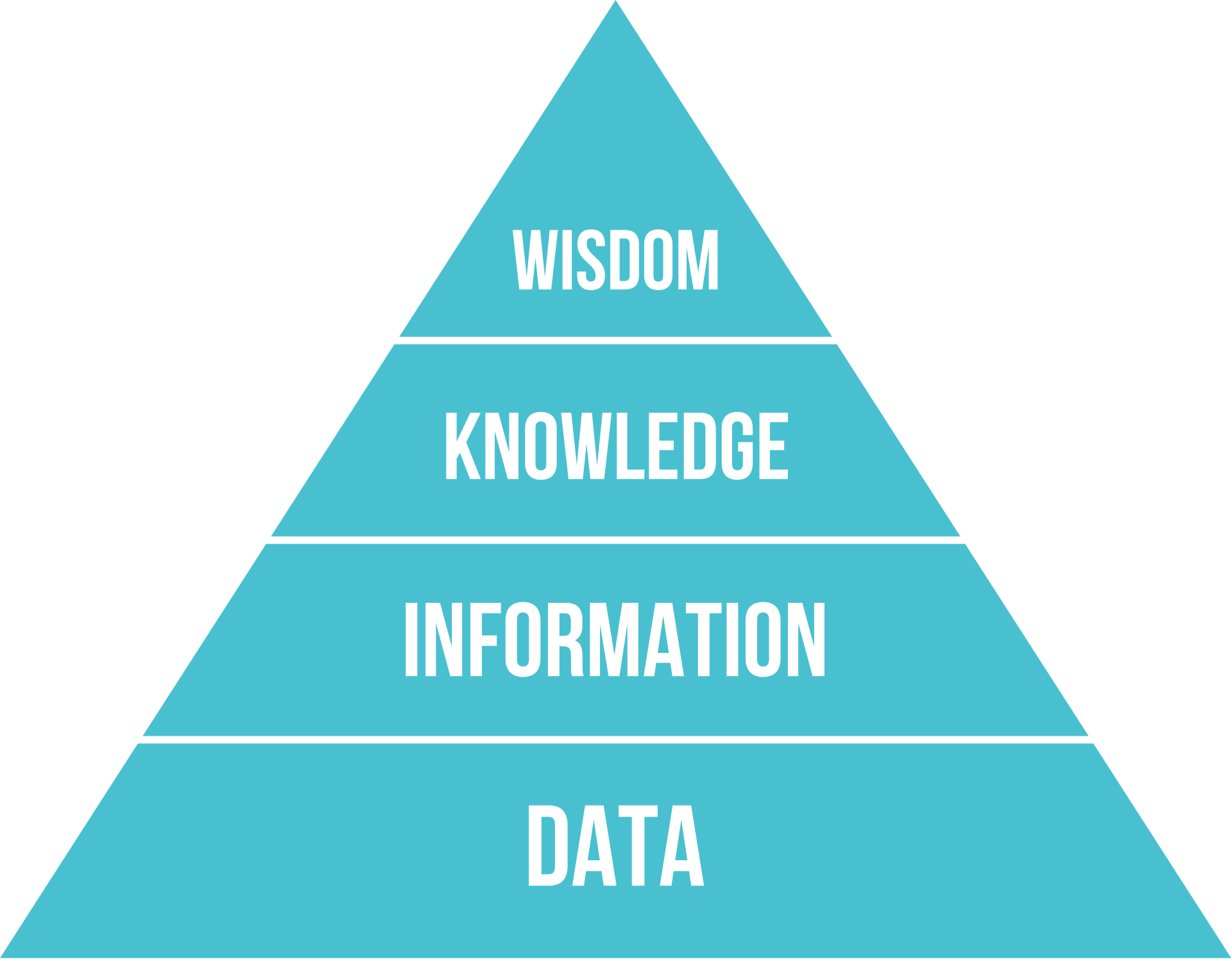
What’s interesting is that in the current reality, the clinician is both part of the information layer (he’s observing, measuring and writing things down) and the wisdom layer (he’s the one deciding which approach to pursue). The AI is limited to synthesising and interpreting the data, maybe even suggesting a list of treatment options, but the final decision is made by the human.
This isn’t because humans are better at making informed decisions based on the data they have (they are not) or because an AI cannot carry responsibility (they will be able to). It’s rather that an AI - despite all of its intelligence and access to stored data - doesn’t have all the data or all the context after all; only humans do. There are certain things only humans can see, feel and understand; things that are not measurable and that are culturally or personally specific. How we value things, how we make choices, how we weigh options.
A breastfeeding mother might want to avoid taking antibiotics as a first treatment option, as that means she might have to stop breastfeeding, even if antibiotics would have been the fastest and most effective treatment for her condition. A person with a partially blocked artery might not want to get a stent right away, as that may be in the way of them achieving their dream to make a long-planned emotionally important trip. An old patient with cancer might not want to go through therapy or surgery, as they prefer to live the little time they have left in peace.
Those are all judgement calls that are entirely linked to each person’s individual setting and preference. From that lens, the AI works in a vacuum - they have the disease and biology data, but don’t have the “human condition” data, and I’d argue they never will.
Seth Godin captured it best in his mini essay:
Decisions are easy, choices are hard.
A good decision is our best analysis of the facts, options and risks. If it’s too close to call, flip a coin, because it’s too close to call.
On the other hand, a choice involves understanding our priorities, evaluating our preference for risk and sometimes, changing our minds. None of these are easy.
If we face a difficult choice, it’s helpful to stop thinking about it as a decision. It’s a choice. Decisions are strategic, choices are personal.
AI is great at making decisions; but when it comes to making choices, we need humans.